About University
About University
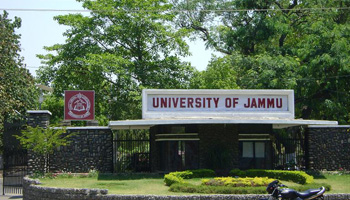
Cradled in the lap of mountains at the foothills of auspicious Trikuta, besides the river Tawi at an altitude of 1030 ft. is Jammu. This 'city of temples' has many places...
Cradled in the lap of mountains at the foothills of auspicious Trikuta, besides the river Tawi at an altitude of 1030 ft. is Jammu. This 'city of temples' has many places...


One of the emerging challenges faced by any higher educational institution is the development, application and maintenance of quality...
JU celebrates 80th Independence Day with patriotic fervour; VC exhorts University fraternity to lead India’s Viksit Bharat Journey
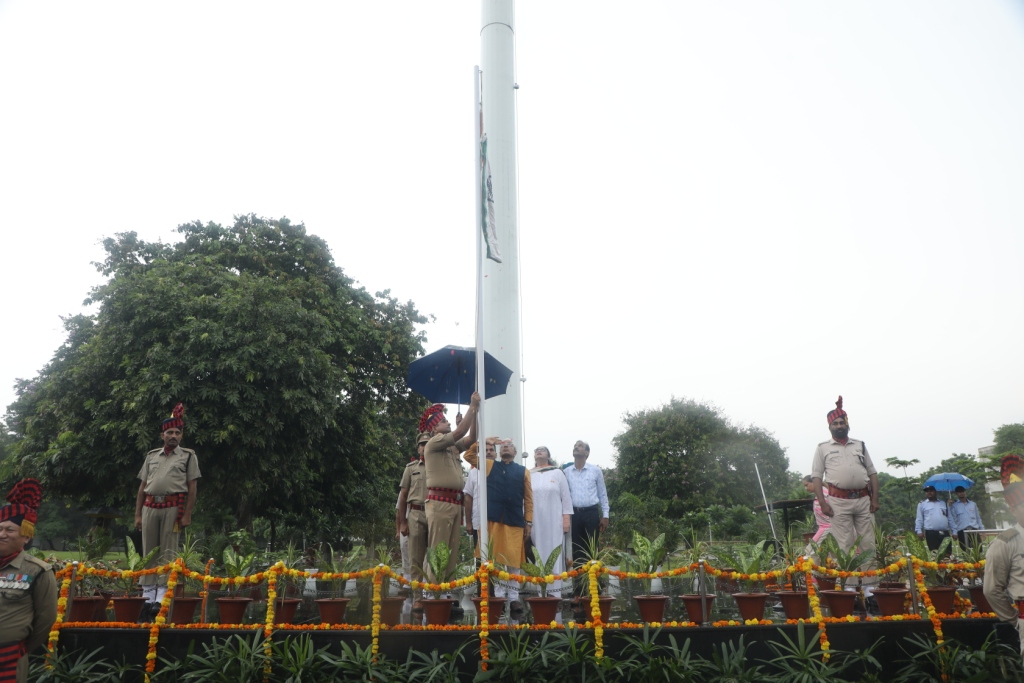
JAMMU, Aug 15: The University of Jammu celebrated the 80th Independence Day with patriotic fervour and enthusiasm, with Vice-Chancellor Prof Umesh Rai calling upon universities to move beyond conventional classroom learning and take a defining role in India’s journey towards becoming a developed nation by 2047.
The celebrations began with Prof Rai hoisting the National Flag amid the singing of the National Anthem.
Earlier, he inspected the Guard of Honour presented by the University Security Wing. Students, teachers, officers and non-teaching employees joined the celebrations.
Addressing the University fraternity , Prof Rai paid rich tributes to the freedom fighters and countless men and women whose sacrifices secured India’s Independence. He also remembered Sri Aurobindo on his birth anniversary, describing him as a great philosopher, nationalist and a leading figure of India’s freedom movement.
Prof Rai said Independence was not merely a historical achievement but a continuing responsibility. Universities, he said, carried a greater responsibility as campuses shaped the ideas, values, scientific temper and leadership of tomorrow’s India.
“If the vision of Viksit Bharat has to be realised, educational institutions will have to play a defining role,” he said, stressing that universities must connect education with the challenges facing society and the nation.
Emphasising skill development, innovation, entrepreneurship and employability, the Vice-Chancellor said the University was steadily reshaping its academic ecosystem to prepare students not merely as job seekers but also as innovators, entrepreneurs and job creators.
Referring to the pioneering Design Your Degree (DYD) programme, Prof Rai said the initiative had earned recognition at the national level. He credited its success to faculty members who, alongside their regular teaching and research responsibilities, volunteered to mentor students across disciplines. The performance of JU students at national innovation platforms, including competitions involving IITs and IIMs, he said, showed what young minds could achieve with the right mentoring and opportunities.
He said the same collective spirit enabled the University to introduce the Five-Year Integrated UG-PG Programmes, aimed at attracting and retaining talented young minds from Jammu and Kashmir, with strong support from Heads of Departments, faculty and the University's academic bodies.
Highlighting the academic expansion, Prof Rai referred to the introduction of B.Tech in Electronics and Communication Engineering at UIET, Kathua Campus, Four-Year Bachelor of Physical Education and Sports, Two-Year Integrated Master of Library and Information Science and the Integrated Teacher Education Programme. New Ph.D. programmes in Journalism & Media Studies, Philosophy and Engineering & Technology have also been initiated.
He said 68(teaching, non-teaching and officer positions) were sanctioned for UIET, Kathua Campus and the recruitment process is now being initiated.
The newly established Department of Foreign Languages, he said, would offer certificate and diploma programmes in Spanish, German, French, Japanese, Chinese, Korean and Russian, giving students global communication skills and wider employment opportunities.
Highlighting the University's growing innovation ecosystem, Prof Rai said students mentored through SIIEDC had excelled at national innovation and hackathon platforms. He also referred to Innovathon 1.0, which brought together around 107 teams and 321 participants from universities, engineering and management institutions, startups and innovation groups from across the country.
Prof Rai stressed the need to connect contemporary education with the Indian Knowledge System. Referring to the Sri Aurobindo Gyan Kendra and Gandhian Centre for Peace and Conflict Studies, he said Indian knowledge traditions should not remain confined to specialised centres but find an appropriate place in curricula across disciplines.
Turning to Jammu’s cultural and linguistic diversity, he referred to the establishment of the Centre for Regional Studies, Culture, Dialects & Emotional Intelligence and the creation of corpus funds to provide long-term support to academic, literary and cultural initiatives.
Referring to the Jammu Vishwavidyalaya: Sahitya Sanskriti Samagam, Prof Rai said the initiative brought the languages, dialects, literature, art, traditions and communities of the region onto a common platform. Jammu, he said, represented a remarkable example of unity in diversity that deserved to be showcased nationally and internationally.
“Education remains incomplete without culture, creativity and community engagement,” he said, referring to the University's flagship youth festival GOONJ-2026 and other cultural initiatives. He appreciated the Department of Students Welfare, faculty and students for creating platforms for widespread student participation.
On the challenge of drug abuse, Prof Rai said there could be no Viksit Bharat without a healthy and drug-free India. Referring to the University's participation in the Nasha Mukt Yuva for Viksit Bharat Sankalp Abhiyan, he said youth would be the principal force behind India's transformation and universities had a responsibility to mentor and prepare them as responsible guardians of society and the nation.
Dwelling on the University's long-pending land issue, Prof Rai said the process concerning acquisition of147 kanals and 11 marlas of land under the occupation of Army, adjoining the Main Campus has reached an advanced stage and the University would pursue the remaining formalities with the concerned authorities to secure its possession at the earliest.
Describing the land crucial for the University's future, he vehemently pitched for a comprehensive master plan capable of meeting the institution's requirements for generations.
He envisioned the proposed expansion with multi-storeyed academic towers, underground parking, wide internal roads, interconnected buildings, adequate emergency infrastructure and substantial open and green spaces.
“We should not plan only for the next few years. This generation has a responsibility to dream and plan for the University for hundreds of years to come,” Prof Rai said, stressing that the opportunity must be utilised with foresight as land availability would become increasingly difficult in future.
He also referred to the University's acquisition of around 50 kanals of land in Kashmir, secured without financial expenditure on the land, to expand its academic and research presence in the Valley. Fencing work, he said, was underway and a temporary structure was being developed. The proposed centre would serve as a multidisciplinary platform for research on culture, philosophy, social issues, science, agriculture and other areas relevant to Jammu and Kashmir, besides facilitating collaborations with institutions across the country.
On digital infrastructure, Prof Rai said the University's Centre for IT Enabled Services and Emerging Technologies had achieved 100 Gbps network connectivity, a major jump from the earlier 1 Gbps capacity. The next phase, he said, would involve replacement and modernisation of the University's ageing optical-fibre infrastructure.
The Vice-Chancellor also called for renewed efforts to provide internal research grants to faculty members to encourage quality research and innovation. He said faculty promotion processes, including the long-pending Senior Professorship cases, had resumed, while the University was moving ahead with engaging Professors of Practice to strengthen the interface between academics and professional expertise.
Referring to student and employee well-being, Prof Rai said a Mental Health & Counselling Unit had been established at the University Health Centre to provide counselling, emotional support and psychological guidance to students, teachers, officers and employees.
Looking ahead, Prof Rai said universities were operating at a defining moment marked by rapid advances in artificial intelligence, biotechnology, space exploration, digital transformation and global connectivity, alongside challenges such as climate change.
“The question before universities is not simply whether we can keep pace with change. The question is whether we can lead that change,” he said.
Outlining his vision, Prof Rai said the University of Jammu must become an institution that creates knowledge rather than merely consumes it, produces innovators rather than merely degree holders, remains deeply rooted in the cultural heritage of Jammu and Kashmir while being proudly connected with India and the world, and contributes meaningfully to Viksit Bharat.
Attributing the University's achievements to its faculty, officers, non-teaching employees and students, Prof Rai also acknowledged the support of civil society, media and other stakeholders.
“You are strength of this great institution ,” he told the University fraternity, saying the institution's progress had been possible through the collective commitment and cooperation of every section of the University.
Prof Rai called upon teachers, students, officers and employees to work collectively to take the University of Jammu among the country's leading institutions, while contributing equally to the progress of Jammu and Kashmir and the nation. He urged the fraternity to renew its Independence Day resolve to strengthen the institution through knowledge, innovation, service and a deep sense of responsibility towards society and the country.
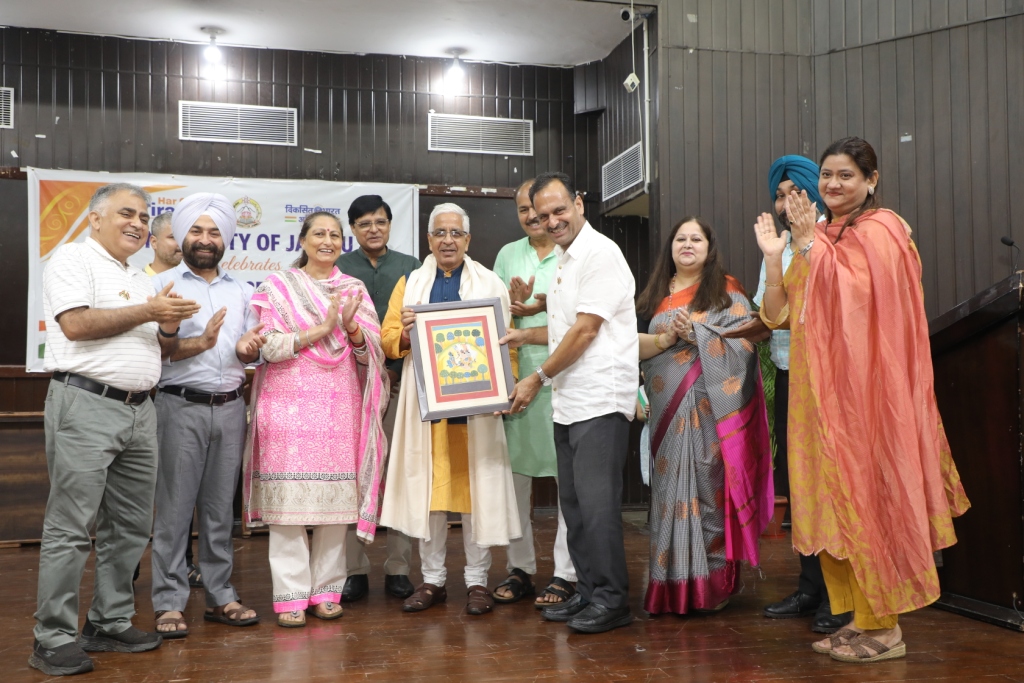
In a special moment during the celebrations, the Department of Students Welfare felicitated Vice-Chancellor Prof Umesh Rai for the significant academic and institutional achievements made by the University under his leadership. Prof Sarika Manhas, Co-Chairperson, Campus Cultural Committee, read out the citation highlighting the University's journey and major initiatives undertaken during his tenure.
The citation highlighted the introduction of the Design Your Degree programme and Five-Year Integrated UG-PG Programmes, expansion of academic opportunities, infrastructural development and student-centric initiatives. It made special mention of the progress in resolving the decades-old issue concerning University land under the possession of the Army, which would open new avenues for the University's future expansion.
Earlier, welcoming the participants, Prof Prakash C. Antahal, Dean Students Welfare, described Independence Day as an occasion to remember with gratitude those who sacrificed for the country’s freedom and to renew the collective responsibility towards the nation. He said the true spirit of freedom lay in carrying forward the values of unity, responsibility and service.
The programme concluded with a vote of thanks by Prof Sarika Manhas, Co-Chairperson, Campus Cultural Committee, who thanked the Vice-Chancellor, University authorities, faculty, Officers,staff, students and all those associated with the successful organisation of the Independence Day celebrations.
The wards of University employees and University students who presented colorful patriotic cultural presentations included Yakshita Singh, Aradhya, Ghanika, Bhumi, Vanshika, Tanishqa Sharma, Chanpreet Kaur, Amanpreet Kaur, Sakshi Billawria, Ayansh Mahajan, Vedhant, Ridhul Sangra, Sushma Deol and Rajdeep Singh.
Among others present on the occasion were Deans, Directors, Rectors, Heads of various Departments, officers, scholars, teaching and non-teaching staff, and students of the University.
It is pertinent to mention here that the events of the Department of Students Welfare are organized under the guidance of Prof. Prakash C. Antahal, Dean Students Welfare, Prof. Monika Chadha, Chairperson, Campus Cultural Committee and Prof. Sarika Manhas Co-Chairperson, Campus Cultural Committee and are coordinated by Dr. Pritam Singh, Associate Dean SW, Dr. Shallu Sharma & Dr. A.R. Manhas (Deputy Chief Proctors), Dr. Harleen Kaur & Dr. Ripudaman Parihar (Assistant Deans) Ms. Mansi Mantoo, Officer Incharge(DSW), Sumeet Sharma, Drama Instructor. The sound was looked after by Kulbhushan Thakur and Arif Paul.