About University
About University
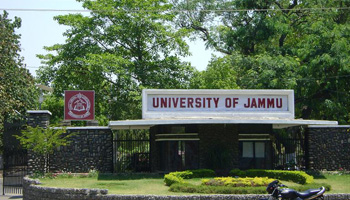
Cradled in the lap of mountains at the foothills of auspicious Trikuta, besides the river Tawi at an altitude of 1030 ft. is Jammu. This 'city of temples' has many places...
Cradled in the lap of mountains at the foothills of auspicious Trikuta, besides the river Tawi at an altitude of 1030 ft. is Jammu. This 'city of temples' has many places...


One of the emerging challenges faced by any higher educational institution is the development, application and maintenance of quality...
Workshop on “Nari Shakti Vandan Adhiniyam 2023” held at University of Jammu
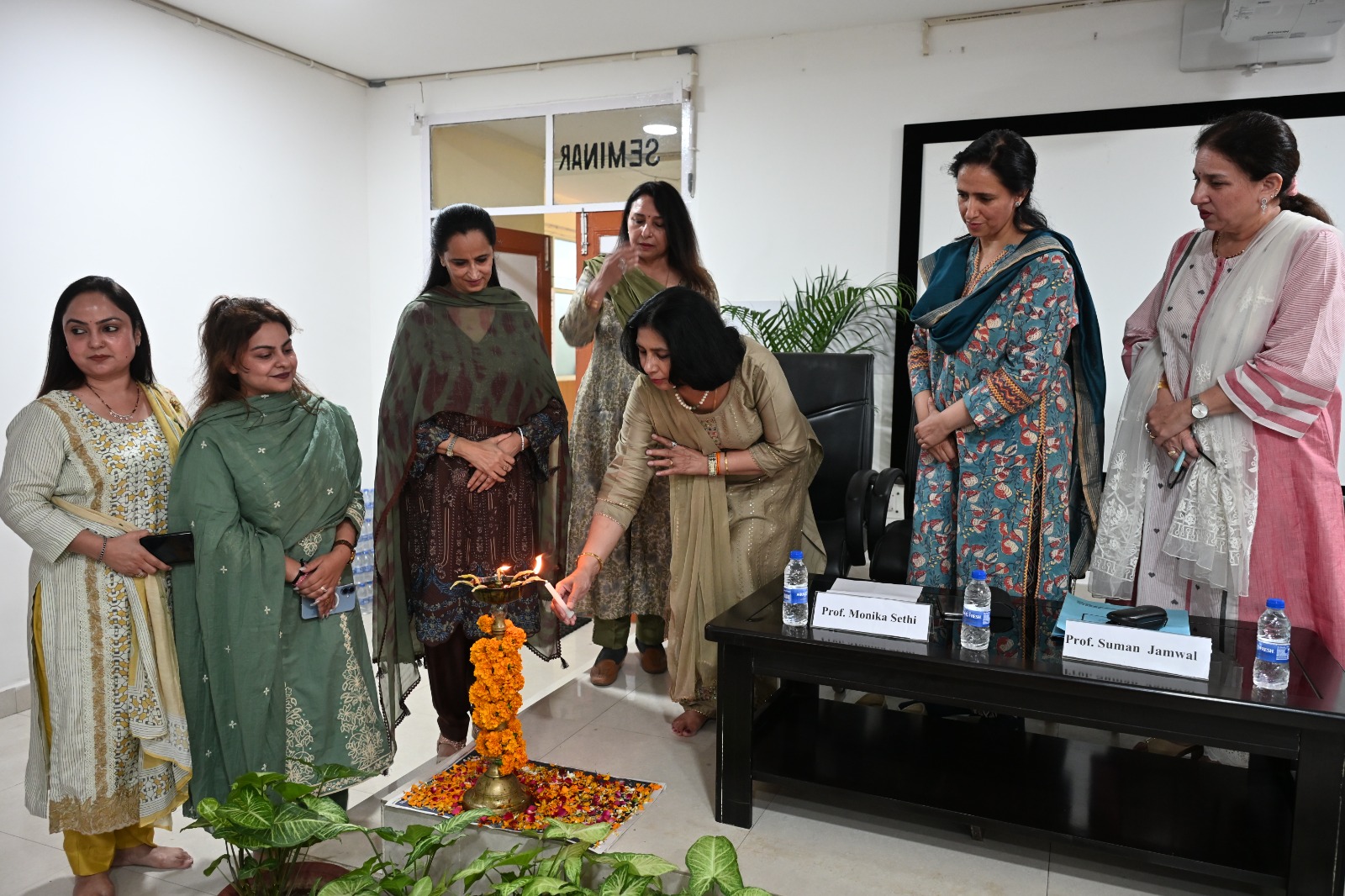
Jammu, April 13: The Centre for Women’s Studies, University of Jammu, successfully organized a workshop on the theme “Nari Shakti Vandan Adhiniyam 2023” today in the Seminar Hall of Environmental Sciences, University of Jammu. The workshop was organised for faculty members, scholars and students from various departments of the University with the objective of spreading awareness about women’s empowerment, gender equality, and the significance of recent legislative developments in India.
The programme commenced with the arrival and seating of the distinguished guests, followed by the ceremonial lighting of the lamp, symbolizing the dispelling of ignorance and the pursuit of knowledge.
In her welcome address, Prof. Savita Nayyar, Director, Centre for Women’s Studies, introduced the resource persons and highlighted the importance of the Nari Shakti Vandan Adhiniyam, 2023. She described the Act as a landmark reform aimed at strengthening women’s participation in governance by reserving 33 percent seats in the Lok Sabha and State Assemblies. She emphasized that such workshops are essential for spreading awareness, building capacity, and encouraging active involvement of women in decision-making processes. She further noted that the true impact of the Act will depend on timely implementation, effective training, and ensuring meaningful participation rather than symbolic representation, and called for continuous efforts from institutions and society to translate this progressive legislation into real empowerment and inclusive development.
The workshop featured insightful deliberations by eminent resource persons from different disciplines.
Prof. Suman Jamwal, Head, Department of History, shed light on the historical evolution of women’s rights in India and connected it with the present legislative framework. She shared a historical perspective on reservation and stated that women were always actively present in the political system, but never equally represented. She emphasized that the time has come to weave them back into history. Tracing the status of women through different periods, she cited examples of eminent women such as Queen Didda, Gargi, and Maitreyi, who challenged the social norms of their times. She concluded by highlighting structural barriers to women’s participation and expressed that the Act will ensure assured representation and help correct long-standing imbalances.
Prof. Monika Sethi from the Department of English discussed the role of language and literature in shaping perspectives on gender equality and women’s empowerment. She linked literature with politics by referring to J.S. Mill’s essay “The Subjugation of Women.” Describing the Act as a civilizational correction, she emphasized that equality enhances collective progress and that a Viksit Bharat cannot be built on half efforts. Connecting Mill’s vision with India’s developmental aspirations, she stated that society will move from subjugation to participation. She also stressed the need for equality of opportunities for all, irrespective of gender, to ensure holistic progress.
Prof. Hardeep Chahal from the Department of Commerce emphasized the economic implications of women’s representation and the impact of inclusive policies on national development. She highlighted concerns regarding the low participation of women in the corporate sector and observed that women are often held back by the glass ceiling and structural barriers. She also deliberated on biases faced by women in consideration for top managerial and leadership roles. She concluded by stressing the need for women’s reservation in law-making bodies to address gender disparity in the political system.
Dr. Vibhuti Ubbott from the Department of Political Science, M.A.M College, Jammu, provided insights into women’s participation in the politics of Jammu and Kashmir. She pointed out the significant disparity in women’s representation in the legislative assembly of J&K compared to Parliament. She stated that shifting political scenarios and years of conflict in the region have further deprived women of a sustained voice in law-making. Citing the continued underrepresentation despite high voter turnout and political awareness among women, she emphasized the urgent need for effective implementation of the Act to improve representation in the Union Territory as well as at the national level, in line with global participation trends.
Prof. Savita Nayyar also acted as the moderator of the session.
Earlier, Dr. Saranjit Kaur, faculty at the Centre for Women’s Studies, formally welcomed the gathering and introduced the theme of the workshop, setting the tone for the session. She also conducted the proceedings of the programme. Dr. Disha Sharma, faculty at the Centre for Women’s Studies, presented a detailed report of the workshop and delivered the formal vote of thanks.
Each speaker provided a unique perspective, making the session highly enriching and thought-provoking. The workshop witnessed active participation, with attendees engaging in discussions, raising questions, and sharing their views. The event served as a meaningful platform for academic dialogue and awareness on gender justice and empowerment.