About University
About University
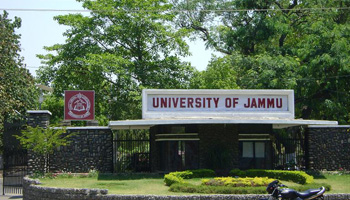
Cradled in the lap of mountains at the foothills of auspicious Trikuta, besides the river Tawi at an altitude of 1030 ft. is Jammu. This 'city of temples' has many places...
Cradled in the lap of mountains at the foothills of auspicious Trikuta, besides the river Tawi at an altitude of 1030 ft. is Jammu. This 'city of temples' has many places...


One of the emerging challenges faced by any higher educational institution is the development, application and maintenance of quality...
The University of Jammu successfully concluded a significant academic initiative with the valedictory session of the Ten-Day Interdisciplinary Research Methodology Course held from 18 to 28 November 2025. The programme, jointly organized by the Department of Commerce and the Department of Zoology and sponsored by the Indian Council of Social Science Research (ICSSR), New Delhi, aimed at strengthening the research ecosystem of the University by equipping young scholars with contemporary methodological skills, ethical research practices, and cross-disciplinary academic exposure. The valedictory function marked the culmination of an intensive and intellectually stimulating course that brought together researchers from multiple fields to engage with evolving paradigms in scientific and social science research.
The valedictory ceremony was graced by Prof. Umesh Rai, Hon’ble Vice Chancellor, University of Jammu, as the Chief Guest. In his address, the Vice Chancellor appreciated the efforts of the departments in designing a highly relevant and progressive training programme and highlighted the importance of research grounded in methodological rigor, ethical standards, and societal relevance. He encouraged scholars to pursue evidence-based inquiry and to explore interdisciplinary collaborations that contribute meaningfully to national development and global academic advancement. Further, he asserted that the Course director and Co-course director to organise a follow up event on research project proposal development in the near future. Prof. Alka Sharma, Dean, Faculty of Business Studies and Prof. Yash Pal Sharma, Dean, Faculty of Life Sciences, attended the session as Guests of Honour and applauded the initiative for fostering collaboration between the natural sciences, social sciences, and professional disciplines. Prof. Alka Sharma emphasised on transdisciplinary research approach dissolving boundaries and evolving academics. Prof. Yash Pal Sharma urged the participants to develop interdisciplinary mindset and relate AI to their research areas. They appreciated the shift in research culture toward data-driven approaches, ethical accountability, and innovation.
The programme witnessed the gracious presence of senior faculty members including Prof. Seema Langer, Head, Department of Zoology; Prof. Gurjeet Kaur, Course Director and Former Head, Department of Commerce, and faculty members from the University of Jammu such as, Prof. Susheel Kumar Verma, Head, Department of Botany, Prof. Namrata Sharma, Department of Botany, Prof. Jyoti Sharma, Dr. Sakshi Sharma, and Dr. Sunil Kumar from the Department of Commerce, along with Prof. Pankaj Kumar, Co-Course Director, Dr. Parvinder Kumar, Dr. Arti Sharma, Dr. Sarbjeet Kour, Dr. Rakesh Kumar Panjaliya, Dr. Ripu Daman Parihar, Dr. Shash Pal and Dr. Pankaj Chibber from the Department of Zoology. The collective leadership and guidance of the organizing team contributed immensely to the smooth execution and academic success of the course.
The Ten-day training programme was conceptualized with the objective of providing research scholars with exposure to both foundational and advanced methodological frameworks. Scholars from Social Sciences, Life Sciences, Commerce, Management, Education, and Humanities participated and benefited from the structured learning experience. Across 40 technical sessions, the course covered a wide spectrum of themes ranging from research fundamentals to sophisticated analytical techniques. The initial phase of the programme focused on the philosophy of research, formulating research questions, identifying gaps in literature, understanding research design, sampling methods, measurement scales, and comparative strengths of qualitative and quantitative research. Sessions on academic writing emphasized clarity of expression, argument coherence, citation ethics, and manuscript structuring to enhance publication competence among the participants.
Mid-course sessions shifted to qualitative research methods, including case study methodology, observation, and interview techniques with attention to both verbal and non-verbal cues. The participants were sensitized to research ethics, plagiarism, authorship norms, publication malpractice, and responsible conduct of research. These sessions underscored the principle that scientific progress must prioritize transparency, honesty, and respect for the dignity of research participants. Practical training on journal selection, abstract writing, review processes, and avoiding predatory journals proved especially beneficial for young researchers preparing to enter academic publishing.
The later part of the programme focused on statistical analysis, multivariate modelling, digital academic resources, mixed-methods designs, and phenomenology. Hands-on training familiarized scholars with multivariate regression, correlation analysis, interpretation of effect size, and software-based data analysis. Workshops on accessing digital libraries and academic databases introduced participants to international indexing platforms, subject repositories, and open-source archives, reducing dependence on non-validated information sources. A dedicated session on emerging Artificial Intelligence applications in research intrigued participants with discussions on AI-assisted literature screening, language support, pattern recognition, and simulation-based modeling, while reiterating the ethical boundaries of AI use to discourage unacknowledged or irresponsible application.
The concluding day addressed interviewing techniques for special and vulnerable populations, emphasising cultural sensitivity, institutional clearance, and ethical safeguards. The training also incorporated discussions on interviewer competence, behavioural expectations during fieldwork, and limitations of interview-based research. The programme ended with high-quality group presentations in which participants delivered well-structured PowerPoint presentations on the theme “Politics and Uses of Research: Limits, Dissemination, and Societal Impact.” The discussions highlighted the interaction of science with public policy, institutional structures, and socioeconomic environments, emphasizing that research must remain impartial and socially responsible.
The feedback received from the participants clearly reflected the academic impact of the programme. Scholars appreciated the interdisciplinary nature of the training, which expanded their understanding of the interconnectedness of disciplines and encouraged intellectual flexibility. Many participants acknowledged that the hands-on mentorship model improved their research confidence, enhanced their ability to design and execute studies, and strengthened their analytical capabilities. The programme also encouraged participants to view research not only as a means of generating knowledge but also as a tool for addressing societal challenges and promoting ethical responsibility.
In its essence, this Research Methodology Course achieved its intended goals of enriching the research capacity of scholars at the University of Jammu and fostering a culture of responsible and collaborative scholarship. A special aspect of the course was sessions conducted by International experts from Canada, Australia and France. The efforts of the organizing departments received appreciation from all stakeholders, and the participants expressed gratitude for the opportunity to learn from experts from diverse fields. The University of Jammu extended special thanks to ICSSR, New Delhi, for sponsoring the programme and supporting academic initiatives that strengthen research quality in higher education institutions.
The valedictory function concluded with a formal Vote of Thanks, distribution of certificates, and warm appreciation to the resource persons, faculty members, scholars, and administrative teams who contributed to the success of the programme. The programme marked an important milestone in reinforcing the University’s commitment to nurturing research excellence and cultivating interdisciplinary perspectives among young academics.