About University
About University
Cradled in the lap of mountains at the foothills of auspicious Trikuta, besides the river Tawi at an altitude of 1030 ft. is Jammu. This 'city of temples' has many places...

Cradled in the lap of mountains at the foothills of auspicious Trikuta, besides the river Tawi at an altitude of 1030 ft. is Jammu. This 'city of temples' has many places...



One of the emerging challenges faced by any higher educational institution is the development, application and maintenance of quality...
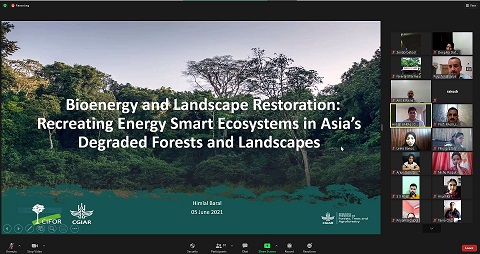
World Environment Day is held annually on June 5 to raise worldwide awareness to protect the environment and to take proactive steps for the betterment of our planet. The day was designated by UN General Assembly in the year 1972 on the first day of the UN Conference on the Human Environment and is being celebrated every year since 1974, engaging governments, businesses, institutes, and citizens to focus their efforts on pressing environmental issues. The theme for World Environment Day 2021 is ‘Ecosystem Restoration’. To commemorate “World Environment Day 2021”, the Department of Environmental Sciences, University of Jammu, organized an International Webinar to highlight the importance of ecosystem restoration with an emphasis on recreating energy-smart ecosystems in Asia’s degraded forests and landscapes. Dr. Himlal Baral, Senior Scientist, and Eco-restoration expert, Center for International Forestry Research (CIFOR) Bogor, Indonesia, was the resource person on the occasion. He through a PowerPoint presentation on the topic “Bioenergy and Landscape Restoration: Recreating Energy Smart Ecosystems in Asia’s Degraded Forests and Landscapes” explained how degraded forests and landscapes can be restored while producing bioenergy and reducing carbon footprints. He discussed at length about various aspects of ecosystem restoration including natural capital valuation, challenges, and opportunities, as well as possible policy approaches that should be considered for mainstreaming landscape restoration. He also highlighted some good practices among business and industry in India that could be helpful in better management of biodiversity and ecosystem components.
Chief Guest of the occasion, Prof. M.K. Dhar, Hon’ble Vice-Chancellor, University of Jammu, appreciated the efforts of the Department of Environmental Sciences for choosing such important, apt, and meaningful issue for the webinar and stressed upon the need of planning and implementing eco-restoration measures not only at the community level but at the individual level also. He urged the department and the participants to involve in small-scale ecosystem restoration activities for their respective areas which could be the first step towards their contribution to the restoration of the degraded areas in the Union Territory of Jammu and Kashmir. Prof. Dhar expressed his grave concern over the fast-degrading environs. He impressed upon the need to prevent, halt and reverse the degradation of ecosystems at the localized scale and urged to contribute every individual in this direction.
Prof. Piyush Malaviya, Head, Department of Environmental Sciences, formally welcomed the participants and briefly introduced the theme of the webinar. Dr. Deepika Slathia, Sr. Asstt. Prof., Department of Environmental Sciences, conducted the proceedings of the program and proposed the formal vote of thanks.
Prof. Raj K Rampal, Prof. A.K. Raina, Dr. Rakesh Attri, Dr. Neeraj Sharma, Dr. Meenakshi Khajuria, Sh. O.P. Vidhyarathi, faculty members from other departments of the University, scientists and academicians from other Universities across India, research scholars, students, and the members of the civil society were amongst those who participated in the event