About University
About University
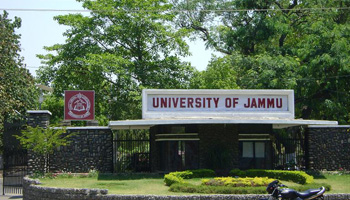
Cradled in the lap of mountains at the foothills of auspicious Trikuta, besides the river Tawi at an altitude of 1030 ft. is Jammu. This 'city of temples' has many places...
Cradled in the lap of mountains at the foothills of auspicious Trikuta, besides the river Tawi at an altitude of 1030 ft. is Jammu. This 'city of temples' has many places...


One of the emerging challenges faced by any higher educational institution is the development, application and maintenance of quality...
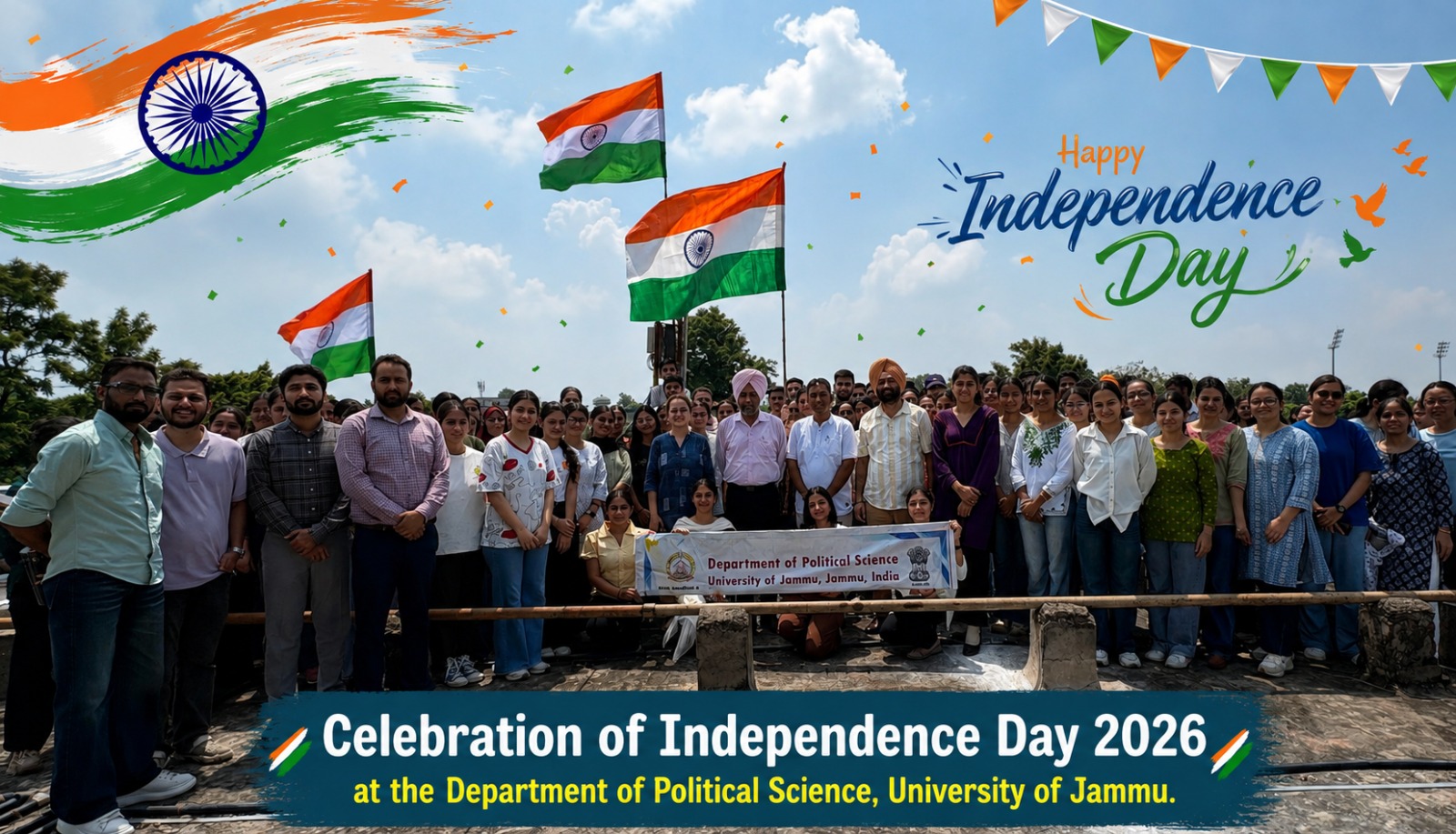
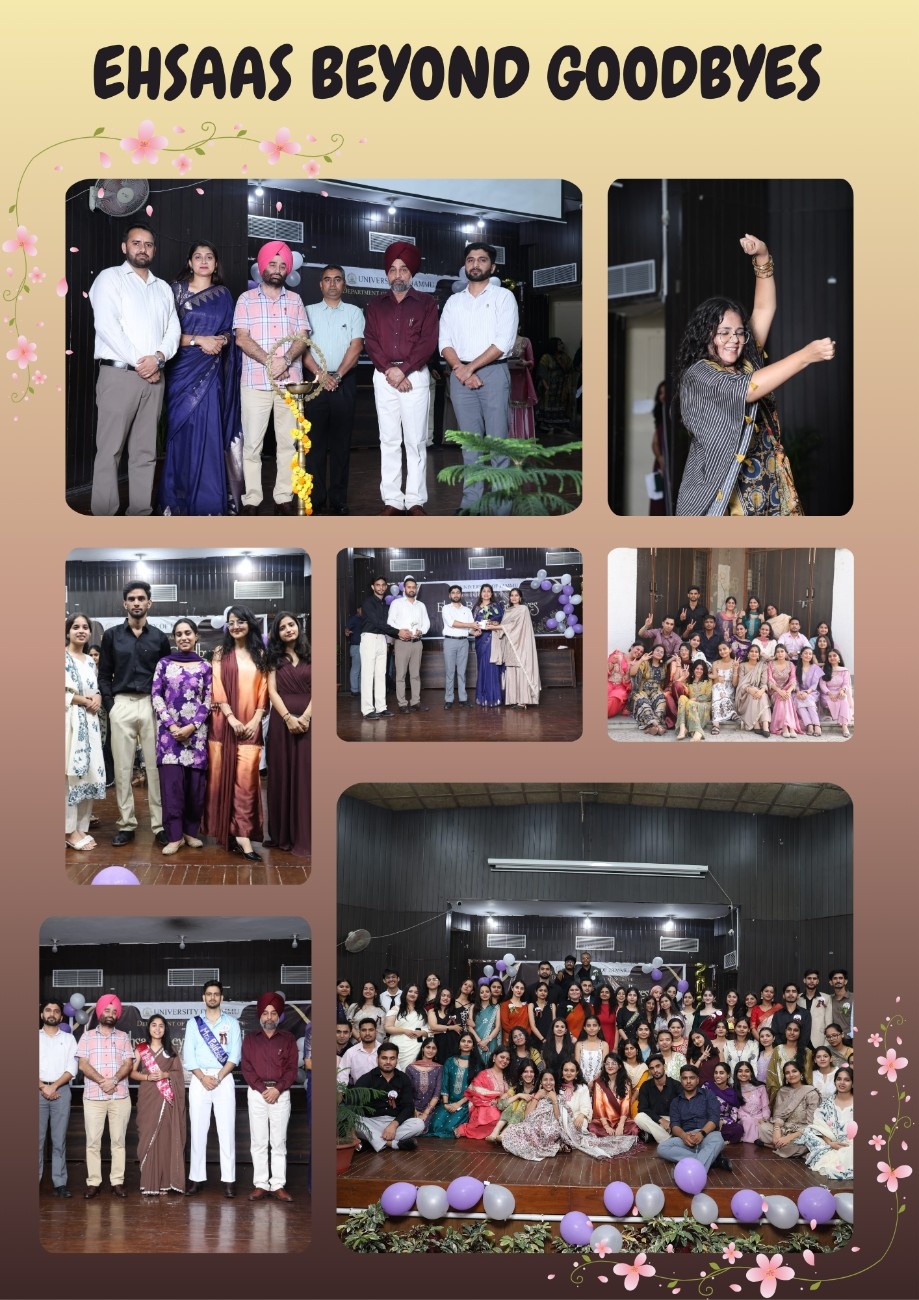
The Department of Political Science organized a farewell programme titled “Ehsas: Beyond Goodbyes” on May 22, 2026, under the initiative of the students of the Master Development Programme (MDP). The event was held to bid a warm farewell to the outgoing students while celebrating the bonds, memories, and academic journey shared within the department. The programme featured cultural performances, interactive sessions, and reflections on the experiences and achievements of the students. Faculty members and students highlighted the importance of academic growth, camaraderie, and the values nurtured during their time in the department. Addressing the gathering,the HOD Prof. Baljit Singh Mann and the faculty members conveyed their best wishes to the outgoing students for their future endeavors and encouraged them to uphold the spirit of learning, leadership, and public service. The event provided an opportunity for students to express gratitude towards their teachers, peers, and the department community. “Ehsas: Beyond Goodbyes” concluded on a memorable note, reinforcing the enduring connection between the Department of Political Science and its students, and marking the beginning of a new chapter in the lives of the outgoing batch.
“Human Rights Scenario in India: Trends and Challenges” - International Human Rights Day on 10 December 2025
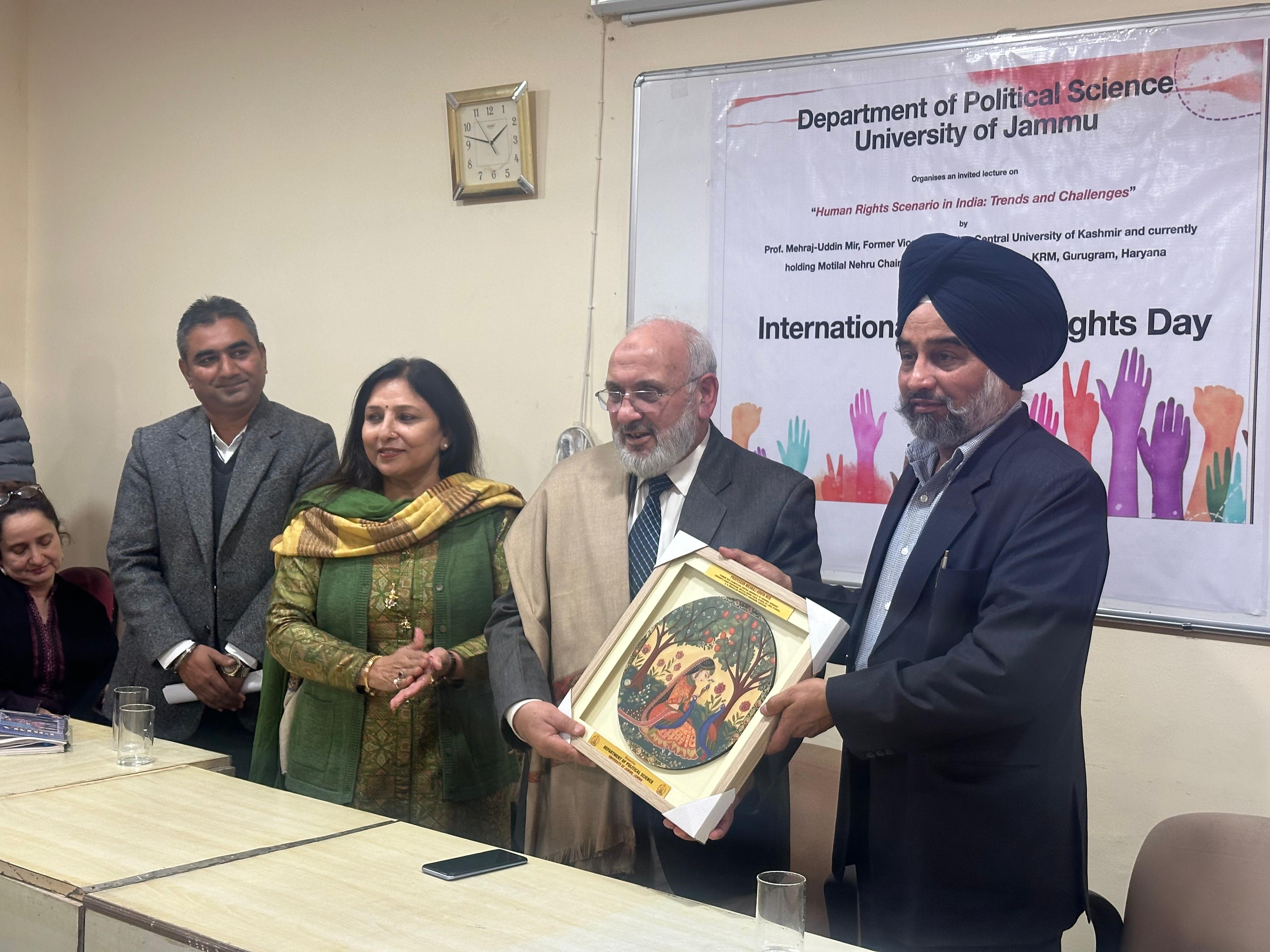
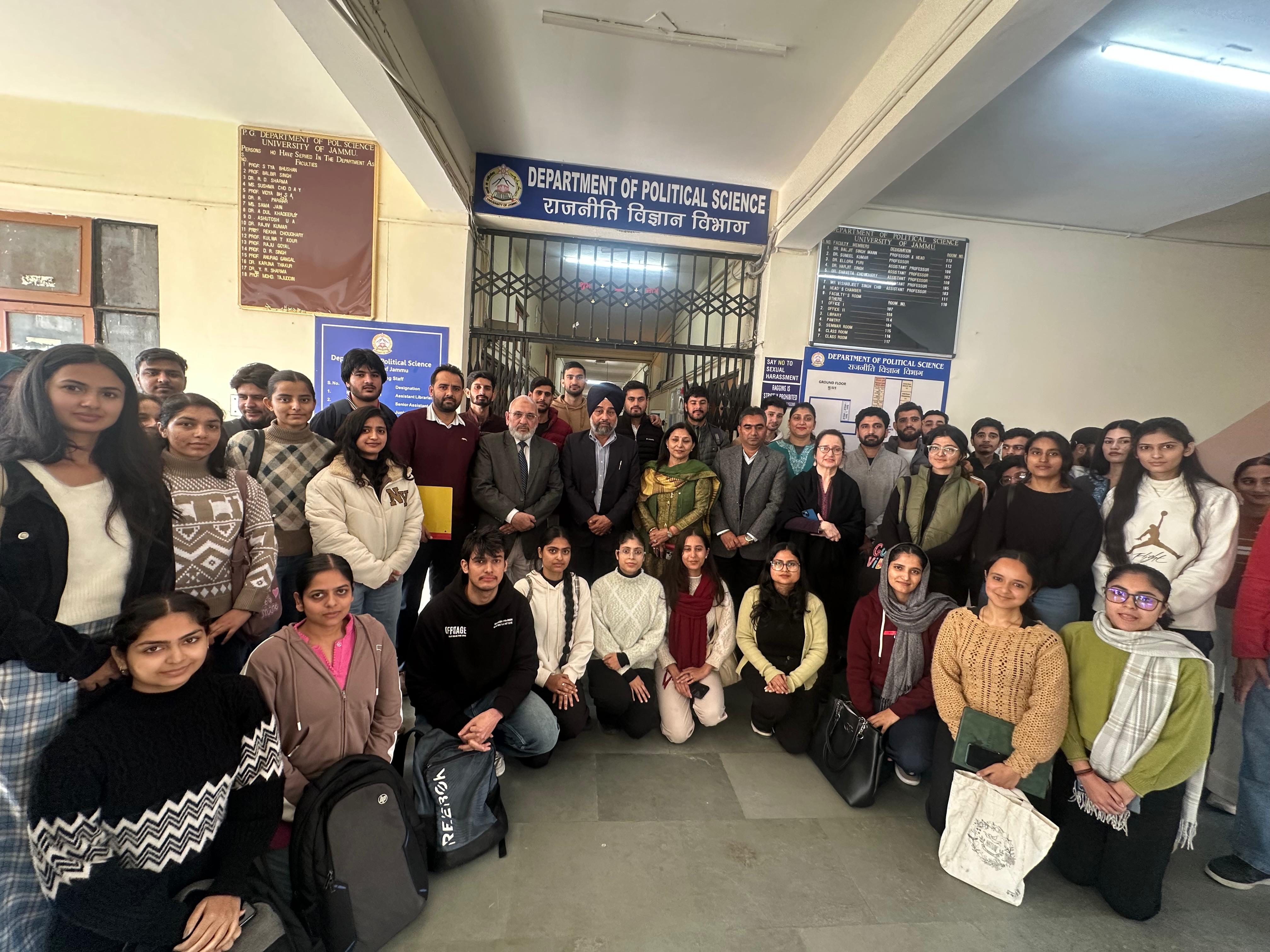
December 10, 2025: The Department of Political Science, University of Jammu, organised an invited lecture on “Human Rights Scenario in India: Trends and Challenges” to commemorate International Human Rights Day on 10 December 2025 at 11:30 a.m. in the Seminar Hall of the Department. The programme began with a welcome address by Prof. Baljit Singh Mann, who extended a warm welcome to the dignitaries, faculty members, research scholars, and students. In his introductory remarks, Prof. Mann underlined the contemporary relevance of human rights discourse in India and briefly outlined the theme and objectives of the lecture in the context of emerging challenges to human dignity, justice, and freedom. This was followed by the formal introduction of the resource person by Dr. Shaveta Chowdhary, who highlighted the distinguished academic and administrative achievements of Prof. Mehraj-Uddin Mir, former Vice-Chancellor of the Central University of Kashmir and currently Chair Professor, Motilal Nehru Chair, School of Legal Studies, K. R. Mangalam University, Gurugram, Haryana. In his thought-provoking lecture, Prof. Mehraj-Uddin Mir raised fundamental philosophical questions such as: Do you believe this world has been created by someone? Who controls this world? And, who has given you life? He further engaged the audience by asking how many among them believed that human beings are immortal. Through these questions, Prof. Mehraj-Uddin Mir sought to establish a deeper understanding of the origins and foundations of human rights. Prof. Mir emphasised that human beings have four basic needs—physical, social, mental/intellectual, and spiritual, and argued that the recognition and protection of these needs lie at the core of any meaningful human rights framework. He raised the crucial question regarding the purpose of life and linked it to the idea that human rights are inherent and inalienable, rather than bestowed by the state. Remarking on ethical accountability, Prof. Mir observed that “if you push, you will be pushed back,” underscoring the principle of reciprocity and moral responsibility in social life. Highlighting the moral universality of human rights, Prof. Mir, further, noted that all religions and teachings of saints, gurus, and prophets emphasise compassion, harmony, and coexistence. He asserted that if any interpretation of religion promotes hatred, it must be re-examined. Drawing upon the reflections of former Chief Justice of India, M. N. Venkatachaliah, made in the context of his engagement with international human rights reports, Prof. Mehraj-Uddin Mir also observed that the twentieth century stands out as the bloodiest in human civilisation, thereby underscoring the deep uncertainty surrounding humanity’s future in the absence of a genuine and sustained commitment to human rights. He further provided a comparative analysis of the United Nations Charter of Human Rights and the Fundamental Rights enshrined in the Indian Constitution by highlighting their shared commitment to protecting human dignity, equality, and justice. Towards the conclusion of his lecture, Prof. Mir stressed the importance of GK (Generation of Knowledge), TK (Transmission of Knowledge), and AK (Application of Knowledge), along with the need to learn how to live, learn how to be, and learn how to know. He also emphasised that peace in one’s immediate surroundings is essential for the realisation of human rights in everyday life. The programme was further enriched by the presence of Prof. Suman Jamwal, Dean, Faculty of Social Sciences, who joined the proceedings and, along with Prof. Baljit Singh Mann and other faculty members of the Department, felicitated the resource person by presenting a memento as a token of appreciation. The event concluded with a formal vote of thanks by Prof. Suneel Kumar, who expressed gratitude to the resource person, faculty members, organisers, and participants for their valuable contributions and active participation. The programme was successfully coordinated by Dr. Shaveta Chowdhary. Faculty members of the Department Dr. Ellora Puri, Dr. Mool Raj, and Mr. Vishabjeet Singh Chib were also present on this occasion. A large number of research scholars and students attended the lecture and actively participated in the academic deliberations, making the event a meaningful observance of International Human Rights Day.
Department of Political Science organized a workshop to commemorate the Constitution Day (26th November, 2025)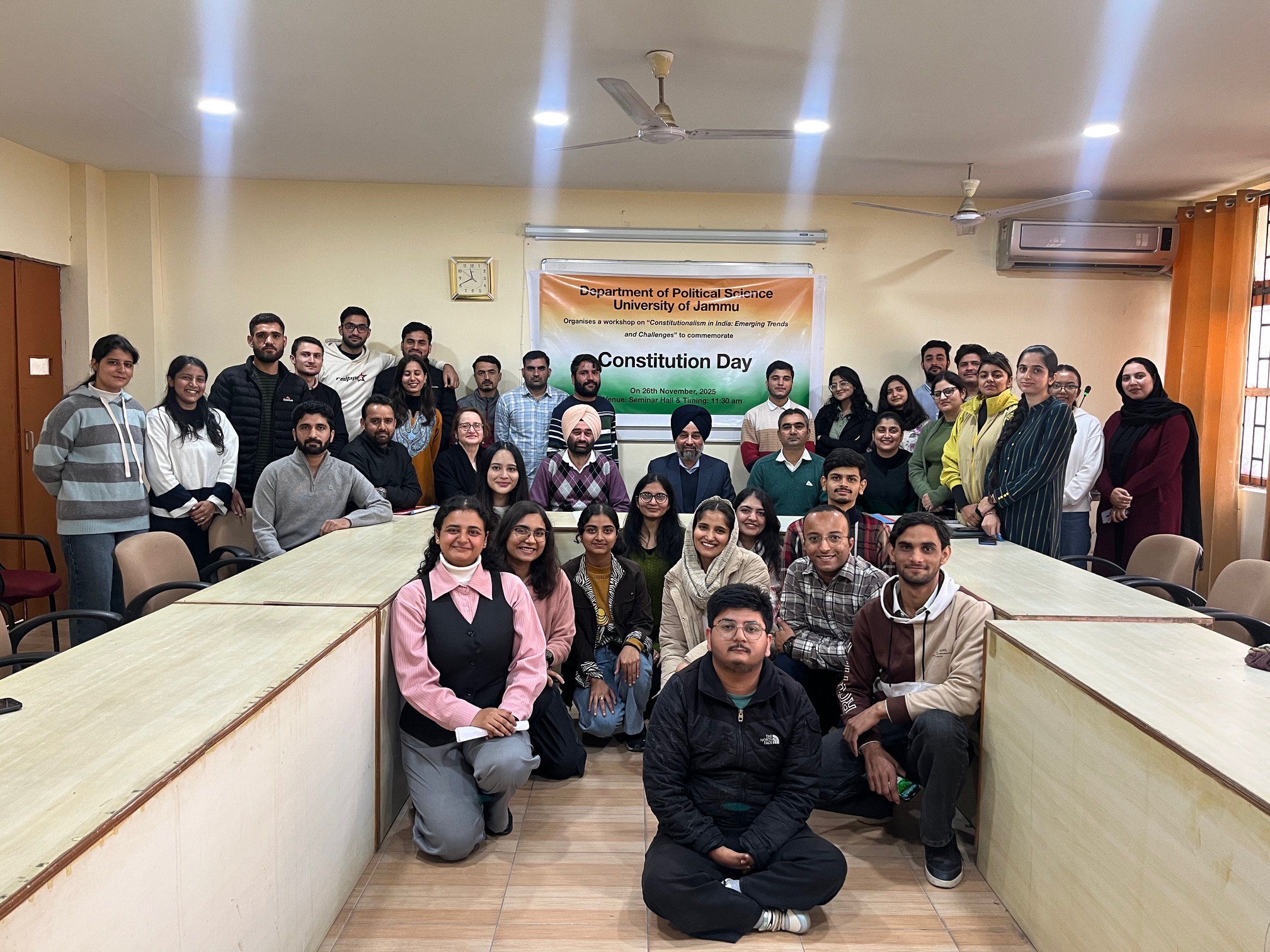
A workshop on the topic ‘Constitutionalism in India: Emerging Trends and Challenges’ was organized by the Department of Political Science , University of Jammu to commemorate the Constitution Day ( Samvidhan Diwas) on 26th November , 2025 in the conference hall of the Department. The proceeding of the workshop was focused on the spirit of constitution and constitutionalism in India. While setting the tone of workshop in his introductory address Professor Baljit Singh Mann, Head, Department of Political Science, made an introspection of the philosophical insights of the Indian constitution. In the historical context, he went deep into the various occasions and instances which were important milestones in the evolution of the constitution and constitutionalism in India. He made a comparison of the inherent spirit of the constitution and the manipulative tendencies of the power hungry elite to grab the opportunities for their self interest, which had weakened that very spirit. He termed constitution as a ‘living document’ which has grown and expanded with the passage of times even through various amendments leading to the positive growth of constitutionalism in the country. At the same time Prof. Mann stressed upon the growing trends and challenges which have affected the spirit of constitutionalism. Overall, he emphasized for alert and informed citizenry to keep alive the spirit of the constitution. Later Professor Suneel Kumar gave his views on methodological aspects of the formation of different constitutions of the world with special reference to the Indian constitution. Prof. Kumar opined that every country in world has a constitution, but every country do not have constitutionalism. Only democratic countries constitutions are based on the concept of constitutionalism; the core idea of which is the limited and responsible government. Dr. Mool Raj, Assistant Professor in the Department of Political Science discussed upon the constitutional morality in India referring to various enactments having the moral basis etc. He focused on constitutional morality as a concept in context of India particularly, and termed it as an integral part of constitutionalism; which turns constitutional text into constitutional culture. Students of Masters degree programme of the department also presented their views. Mridul Jamwal presented her views on the topic “ Evolution of Constitutionalism in India: Lessons from the forgotten History’ and traced the deep roots of constitutional thought in India stretching from ancient normative traditions to colonial constitutional experiments. She highlighted how forgotten historical moments continue to shape modern constitutional practice. Rashmi Sharma spoke on the topic ‘From Rights to Responsibilities: Our path to a better India’ wherein she highlighted, how constitutional rights and fundamental duties complement each other and how responsible citizenship is essential for strengthening of constitutionalism in India. Palak Sharma presented her views on the topic ‘Challenges to Constitutionalism in India’ and examined key issues such as institutional stress, majoritarian tendencies, federal tensions and socio-economic inequalities and issues that shape and sometimes strain the functioning of constitutionalism in Indian democracy. Mitangi Mahajan also expressed her views on the topic ‘Recent Trends of Constitutionalism in India’ and analyzed the latest transformations in constitutional discourse from judicial activism. She argued that constitutional morality is not a natural sentiment, but it has to be cultivated. She spoke on evolution of federalism, digital constitutionalism and rise of judicial constitutionalism in India. Dr. Shaweta Chowdhary , Assistant. Professor in the Department conducted the proceedings of the workshop and also presented the vote of thanks. Dr. Ellora Puri, Dr. Harjit Singh, Mr. Vishwadeep Chib (Assistant Professors), research scholars and students of the department were also present on the occasion.
| Name | Designation | Qualification | Specialization | Contact Info. |
|---|---|---|---|---|
| Prof. Baljit Singh Mann | Professor and Head | Ph. D | International Relations | E-mail: mannbaljit67@gmail.comEPABX: Mobile No.: 9419835781 |
| Prof. Mohd. Tajuddin | E-mail: EPABX: Mobile No.: | |||
| Prof. Baljit Singh Mann | Prof. | Ph. D | International Relations | E-mail: mannbaljit67@gmail.comEPABX: Mobile No.: 9419835781 |
| Dr. Ellora Puri | Sr. Assistant Professor | PhD | Comparative Politcs, State Politics in India, Political Violence, Gender and Politics | E-mail: ellorapuri@jammuuniversity.ac.inEPABX: Mobile No.: |