About University
About University
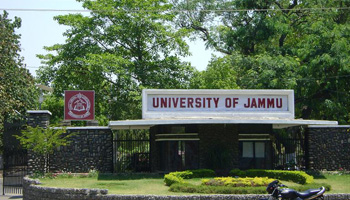
Cradled in the lap of mountains at the foothills of auspicious Trikuta, besides the river Tawi at an altitude of 1030 ft. is Jammu. This 'city of temples' has many places...
Cradled in the lap of mountains at the foothills of auspicious Trikuta, besides the river Tawi at an altitude of 1030 ft. is Jammu. This 'city of temples' has many places...


One of the emerging challenges faced by any higher educational institution is the development, application and maintenance of quality...
Department of History in collaboration with Maharaja Gulab Singh research centre, Jammu and NIIT, New Delhi organized a two days national seminar on “Maharaja Ranbir Singh and the making of the princely state of Jammu and Kashmir.”
In the keynote address Prof. Heeraman Tiwari, Chairperson, CHS/SSS, Jawaharlal Nehru University presented the idea of an ideal king taking inspiration from Lord Rama. He described the ethics of a good ruler by quoting the examples from The Ramayana and how even Sh MK Gandhi was influenced by this idea of ‘Ramrajaya’. This address presented a holistic approach towards understanding the functioning of an ideal ancient monarchy and linking it with modern despots.
Shri Rajendra S. Pawar, Director, NIT, the Guest of Honour on the occasion emphasized the fact that it is the past that shapes our present. It is the role of memory which helps in recreating the past.
Prof. Naresh Padha, Dean Academic Affairs, University of Jammu in his presidential remarks highlighted the importance of constructing the history of the region by filling the gaps in the knowledge about the Dogra rulers. Earlier, Prof. Suman Jamwal, HOD History and convener of the seminar in her welcome address extended a warm welcome to the Chief Guest in absentia Dr. Karan Singh and to other dignitaries.
Brigadier J. S. Rajput, Member secretary Gulab Singh Memorial Trust drew the attention of the audience towards the working of the Trust and its involvement in documenting and preserving the Dogra history of the state. Prof. Shyam Narayan Lal introduced the seminar by reflecting on the dearth of material on the life and time of Maharaja Ranbir Singh. He further highlighted the contributions of the Maharaja and how he was the real architect of the erstwhile State of Jammu and Kashmir. Dr. Madhulika Singh delivered a formal vote of thanks.
It is pertinent to mention here that a panel discussion was organized under the Chairmanship of Prof. Rakesh Batabyal. The panel included Prof. K.N. Pandita, Dr. Ajay Chirangoo, Shri. Harbans Singh and Dr. Sarup Prasad Ghosh. The session was an enlightening debate and discourse on the times of Maharaja Ranbir Singh, the British policy of creating a buffer state and the measures that he took to consolidate the erstwhile state. The deliberations also reflected on the need to revisit the times of Maharaja and credit him for his due contributions to the state.
The first academic session was held at the Rajendra Singh Auditorium with speakers – Ms. Ankita Kar, Padma Shri Prof. Shiv Nirmohi and Dr. Daljeet Singh. The session was chaired by Dr. Mahesh Kaul. The session presented varying debates on the reign of Maharaja Ranbir Singh. Ms. Ankita Kar presented her view on the introduction and establishment of railways in the erstwhile state of Jammu and Kashmir and the role of Maharaja Ranbir Singh in this regard. The session was further enriched by Prof. Nirmohi who provided explicit details of the Dogra rule highlighting the references to the Jammu Kingdoms in many ancient and medieval texts. He emphasized Maharaja Ranbir Singh’s contribution to temple construction and various other spheres of the society be it education, social reforms or welfare measures. The session was concluded by Dr. Daljeet Singh who gave a detailed description of the Maharaja’s cultural contribution.