About University
About University
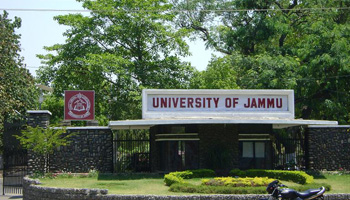
Cradled in the lap of mountains at the foothills of auspicious Trikuta, besides the river Tawi at an altitude of 1030 ft. is Jammu. This 'city of temples' has many places...
Cradled in the lap of mountains at the foothills of auspicious Trikuta, besides the river Tawi at an altitude of 1030 ft. is Jammu. This 'city of temples' has many places...


One of the emerging challenges faced by any higher educational institution is the development, application and maintenance of quality...
Inaugural Session of Bi-Monthly Book Reading Series “KITAB-dar-KITAB” Held at University of Jammu
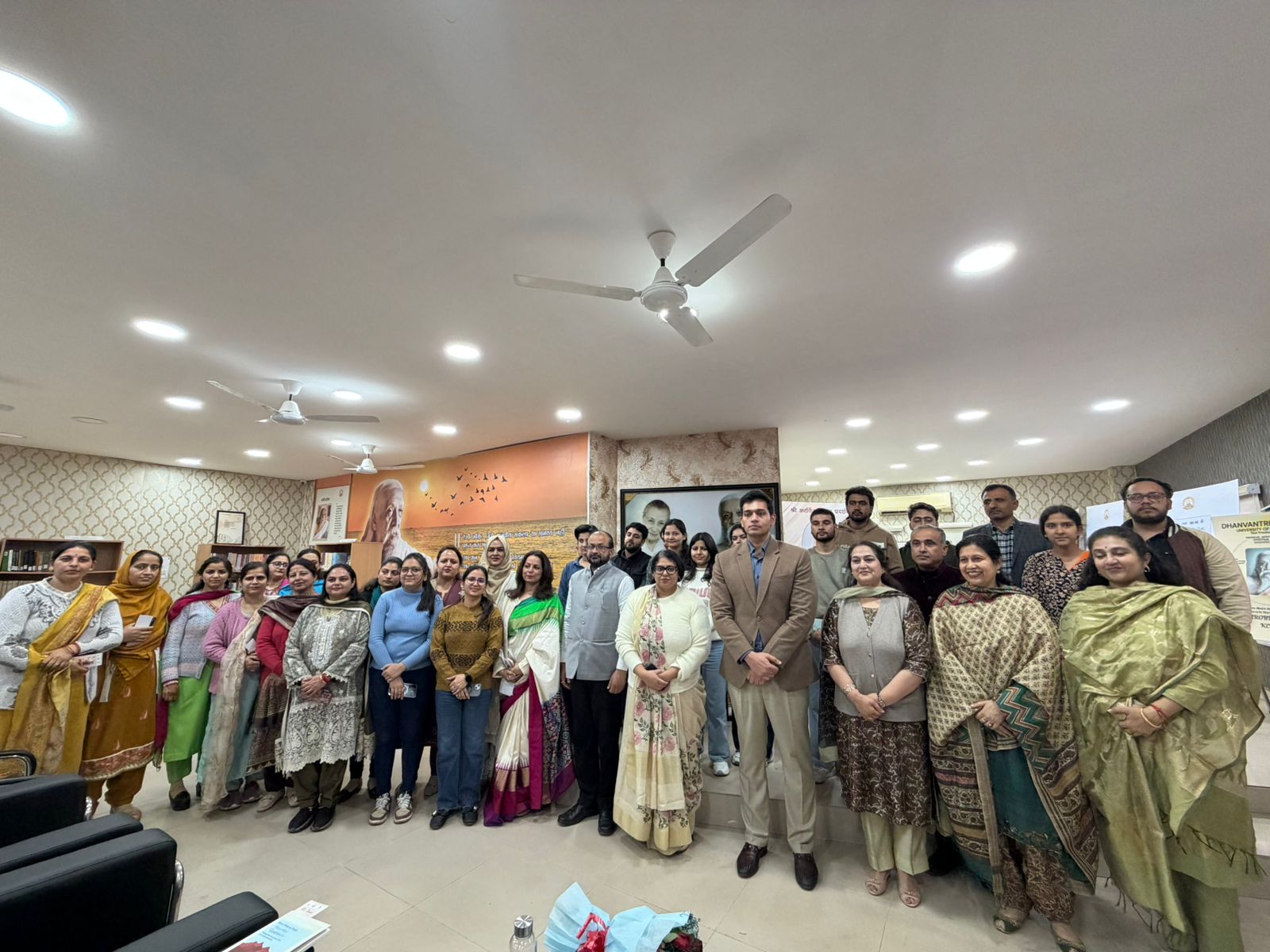
Jammu, February 20: under the patronage of Vice Chancellor Prof Umesh Rai, Dhanvantri Library, University of Jammu, in collaboration with the Indira Gandhi National Centre for the Arts (IGNCA), Regional Centre J&K, and the Translation Club (Utsaah), today organised the inaugural programme of its bi-monthly book reading session series titled "KITAB-dar-KITAB".
The session featured an engaging discussion of the book Mountain Goddesses: Finding Feminine Power from an Unexpected Place, authored by Manu Khajuria Singh.
Rakesh Minhas, IAS, Deputy Commissioner, Jammu, graced the occasion as the Chief Guest and delivered insightful remarks.
He observed that in Jammu, society frequently discusses women in their various manifestations as divine forms and cultural icons.
"Meaningful action should override mere inner consciousness and advocated for a balanced understanding of feminism," said Rakesh Minhas, adding that "Feminism is not a debate of male versus female; rather, as a concept, it is about empowering women in the roles they have always performed with strength and grace.
He said books like Mountain Goddesses remind us of the timeless feminine power embedded in our mountains, folklore, and traditions, inspiring pride in our regional identity and encouraging empowerment through cultural awareness.
Prof Meena Sharma, Chairperson, UTSAAH Club Consortium underscored the importance of creating an ecosystem that nurtures both active readers and passive readers to promote broader literary accessibility and cultural preservation and appreciated the initiative by the translation club and library.
Earlier, Dr. Vikram Singh Sahi, In-charge Librarian, Dhanvantri Library, delivered the welcome address.
He extended warm greetings to the dignitaries, participants, and collaborators, emphasizing the library's commitment to fostering a vibrant reading culture and intellectual engagement on campus.
Dr. Shruti Awasthi, Regional Director, IGNCA, highlighted the deeper purpose of the initiative.
She stressed the need to truly understand books rather than merely reading them, describing books as the greatest source of authentic knowledge.
"Association between the Translation Club and the library is a significant achievement," Shruti Awasti said and noting that every individual has the right to read and write in their native language.
Prof. Garima Gupta, Head, Department of Journalism and Media Studies, and Coordinator, Translation Club (Utsaah), effectively moderated the book discussion with the author, facilitating a thoughtful exchange on the book's core ideas.
During discussion, the author clarified that the book is fundamentally about identity rather than gender, drawing from the rich folklore, oral traditions, and female-centric narratives of the Jammu region's mountainous heritage.
"These stories highlight empowering indigenous role models of feminine divine power and cultural strength," Ms. Khajuria Singh also shared insights into her Authorship Cohort, an online activity where members shared their writings and provided mutual feedback. She read select excerpts from the book, bringing its themes to life for the audience.
The programme included an interactive question-and-answer session, where participants engaged directly with the author and panelists, enriching the discourse on regional identity, feminine power, and literary representation.
Others present on the occasion included Prof Dushyant Kumar Rai, Prof Anil Gupta, Dr Pardeep Bali, Dr Ramiyan, Dr Ravia Gupta and Dr Kunwerjit.
The event was gracefully conducted by Mrs. Azmit Begum, Assistant Librarian, who served as the Master of Ceremonies and ensured the smooth flow of proceedings.
The formal vote of thanks was presented by Mrs. Deepti Padmanabhan, Assistant Administrative Officer, who expressed heartfelt gratitude to the Chief Guest, dignitaries, collaborators, faculty members, students and all contributors for making the inaugural session of “KITAB-dar-KITAB” a meaningful and successful literary endeavour.