About University
About University
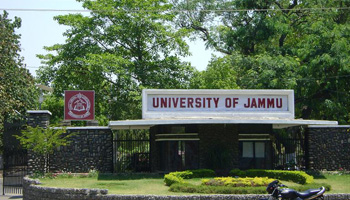
Cradled in the lap of mountains at the foothills of auspicious Trikuta, besides the river Tawi at an altitude of 1030 ft. is Jammu. This 'city of temples' has many places...
Cradled in the lap of mountains at the foothills of auspicious Trikuta, besides the river Tawi at an altitude of 1030 ft. is Jammu. This 'city of temples' has many places...


One of the emerging challenges faced by any higher educational institution is the development, application and maintenance of quality...
Extension Lecture on NEP-2020: “A Roadmap in Achieving the Goal of Viksit Bharat 2047” Organized by Centre for Distance and Online Education
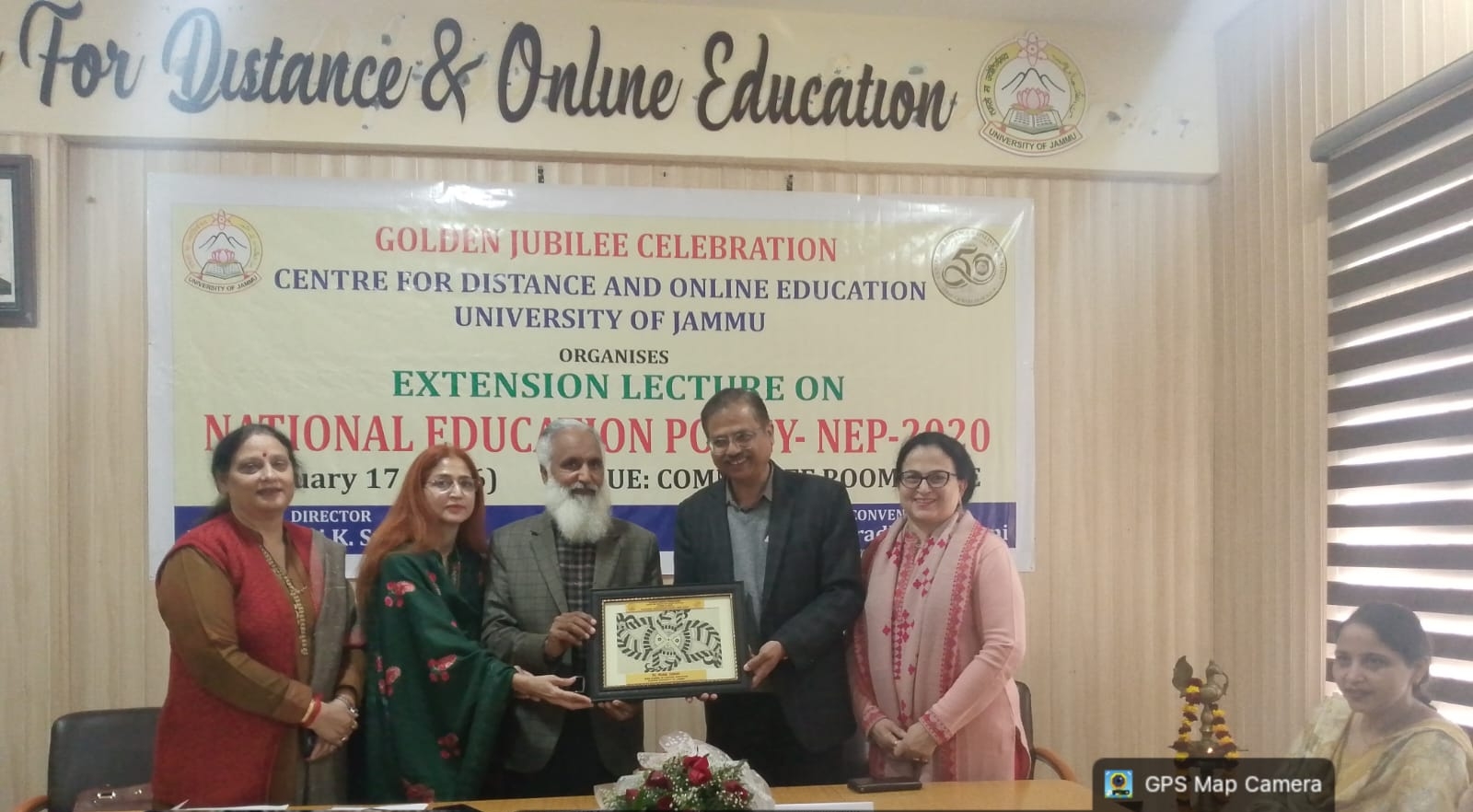
Jammu, February 17: The Centre for Distance and Online Education (CDOE), University of Jammu organized an Extension Lecture on the theme “National Education Policy (NEP) 2020: A Roadmap in Achieving the Goal of Viksit Bharat 2047” as part of its Golden Jubilee Celebrations. The programme aimed to deliberate upon the transformative vision of the National Education Policy 2020 and its pivotal role in shaping an inclusive, innovative, and globally competitive education system aligned with the aspirations of a developed India by 2047.
The Chief Guest on the occasion was Dr. Mohd. Zubair Kales, Dean, School of Teacher Education, Cluster University of Jammu. The programme commenced with the lighting of the ceremonial lamp, symbolizing the triumph of knowledge over ignorance. As a mark of respect and honour, a bouquet was presented to the Chief Guest by Prof. Pankaj Srivastava, Director, CDOE. Later, a memento was also presented to Dr. Mohd. Zubair Kales by Prof. Pankaj Srivastava as a token of appreciation and gratitude.
The formal proceedings began with a warm welcome address by Dr. Anuradha Goswami, Coordinator, M.A. Education and Convener of the function. In her address, she highlighted the relevance of NEP-2020 in reshaping the Indian education system and elaborated on the vision of Viksit Bharat 2047. She emphasized that the effective implementation of NEP-2020 would transform India into a global power and make the nation prosperous and self-reliant. She further underscored the importance of inculcating the value of “Nation First” among students and youth, stating that education must nurture responsible citizens committed to national development. She reiterated that the policy envisions a learner-centric, skill-oriented, and holistic framework aligned with the larger goal of building a developed India by 2047.
Prof. Pankaj K. Srivastava, Director, CDOE, shared his valuable insights on the spirit of NEP-2020. He emphasized that the policy's core lies in its focus on skills, innovation, and employability, noting that skill development is paramount in today's environment. He elaborated on the policy’s thrust on multidisciplinary education, digital initiatives, research, innovation, and capacity building. He further remarked that the Centre for Distance and Online Education is committed to implementing the provisions of NEP-2020 in distance education at the earliest, so that the institution aligns with the nation’s vision and developmental trajectory.
In his enlightening and thought-provoking lecture, Dr. Mohd. Zubair Kales described NEP-2020 as a visionary document reflecting the Hon’ble Prime Minister of India's transformative vision. He stated that the policy seeks to transform knowledge systems and develop the country’s youth into valuable human capital equipped with innovative ideas and global competencies. He informed the audience how the NEP-2020 replaces the earlier National Policy on Education, 1986, and effectively addresses the needs and challenges of the 21st century.
Dr. Kales elaborated on the foundational pillars of NEP-2020—access, equity, quality, affordability, and accountability—and emphasized universalization of education with the goal of achieving 100% literacy. He discussed the holistic and multidisciplinary vision of the policy, including provisions for multiple entry and exit options, flexibility in choosing diverse disciplines such as Artificial Intelligence, entrepreneurship, and climate studies, and the integration of Indian ethos and values within modern education. He referred to the recommendations of previous education commissions and underscored that NEP-2020 ensures equal and quality education for all while promoting multilingualism and the Indian Knowledge System rooted in the pedagogical traditions of the Vedas.
He further emphasized the need for teacher empowerment and a paradigm shift in the teaching-learning process, with a strong focus on critical thinking, competency development, and leadership among youth. He remarked that the policy aims to prepare young Indians for global leadership in science, technology, governance, and culture by 2047, thereby contributing meaningfully to the realization of Viksit Bharat. He envisioned India’s historical role as Vishwaguru and elaborated on how this vision is guided by the timeless philosophy of Satyam, Shivam, and Sundaram.
The lecture witnessed enthusiastic participation from faculty members, scholars, and students, followed by an engaging interactive session that enriched academic discourse. The programme was conducted by Dr. Pooja Sharma, Assistant Professor, Department of Education, CDOE. The event concluded with a formal vote of thanks delivered by Dr. Anuradha Rani, Assistant Professor, Department of Education, who expressed sincere gratitude to the Chief Guest, the Director, faculty members, and participants for their gracious presence and valuable contributions in making the programme a grand success.
The extension lecture was highly informative and inspiring, reaffirming CDOE, University of Jammu's commitment to academic excellence and its proactive role in contributing to the national vision of Viksit Bharat 2047.