About University
About University
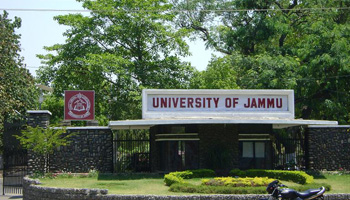
Cradled in the lap of mountains at the foothills of auspicious Trikuta, besides the river Tawi at an altitude of 1030 ft. is Jammu. This 'city of temples' has many places...
Cradled in the lap of mountains at the foothills of auspicious Trikuta, besides the river Tawi at an altitude of 1030 ft. is Jammu. This 'city of temples' has many places...


One of the emerging challenges faced by any higher educational institution is the development, application and maintenance of quality...
Prof Yash Pal Sharma, Former Head and the Coordinator, UGC-SAP DRS II, Department of Botany, University of Jammu delivered a talk on ‘Research Ethics, Integrity and Plagiarism: Concerns and Solutions”’ to the participants of the One Week Workshop on Research Methodology from 25-29th April 2022 organized by Faculty of Life Sciences, Faculty of Pharmaceutical Sciences and Department of Forensic Science under the aegis of Ch. Ranbir Singh Institute of Social and Economic Change, Maharshi Dayanand University ( NAAC accredited A+), Rohtak (Haryana) on 27th April 2022
Presenting his talk at the Swaraj Sadan Auditorium, M.D.University, Rohtak, Prof Sharma explained that research is the key source of generating new knowledge in science and other fields, and making the research findings available in the public domain serves as a key mechanism for dissemination of this knowledge and establishes the basis for future research. Therefore, it is imperative that the published literature is trustworthy and the scientific audiences have faith in it. To ensure research integrity, the execution of ethical standards, research conduct, and accurate documentation and reporting is inevitable, said Prof Sharma. “With the advanced flow and accessibility of information, research ethics and integrity are the most important stakes in doing science as we endeavor to publish our research outcomes and contribute to the progress of science”, believed Prof Sharma. In research, besides good leadership, honesty, accountability, and professional courtesies are extremely imperative. He cited several instances of grave ethical misconducts of plagiarism, image duplication, falsification and fabrication of data, etc. by the high-profile academicians and researchers from prestigious institutes across the globe including some of them from the Indian subcontinent as well. He thoroughly explained the meaning of conflict of interest, plagiarism, data manipulation, and fabrication, authorship issues such as ghost authorship and the menace of predatory journals the world over. Finally, suggesting solutions to such malpractices in research, Prof Yash informed that the Committee on Publication Ethics (COPE) with more than 12,500 members provides detailed information and guidance on ethical publishing and Predatory Publishing across all academic disciplines including biomedical and engineering sciences, pure and applied sciences, and arts, humanities and social sciences. While, the Indian Council of Medical Research (ICMR) have released “National Ethical Guidelines for Biomedical and Health Research Involving Human Participants”, University Grants Commission (UGC), New Delhi, India has also outlined ‘UGC’s Code of Professional Ethics to educate and protect the dignity, rights, safety, and well-being of research participants. To avoid the stress of “publish or perish”, it’s prudent to avoid procrastination and have better time management, develop confidence and conscious use of web resources and follow the path of “ethical publishing” to avoid the charge of plagiarism and severe penalties from the institutions and the distrust of the masses.
Earlier, Prof Rajesh Dhankar, Dean Faculty of Life Sciences, MDU, Rohtak and the Coordinator of the workshop gave an overview and the relevance of holding such workshops. Vote of thanks was proposed by Dr. Sunil Yadav, Associate Professor in the Department of Environmental Sciences, MDU, Rohtak.