About University
About University
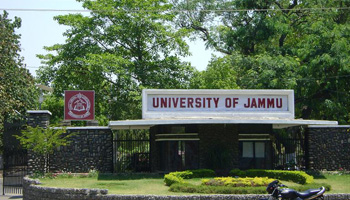
Cradled in the lap of mountains at the foothills of auspicious Trikuta, besides the river Tawi at an altitude of 1030 ft. is Jammu. This 'city of temples' has many places...
Cradled in the lap of mountains at the foothills of auspicious Trikuta, besides the river Tawi at an altitude of 1030 ft. is Jammu. This 'city of temples' has many places...

One of the emerging challenges faced by any higher educational institution is the development, application and maintenance of quality...
Two-Day Capacity Building Workshop on “Convergence of Programmes for Elimination of Beggary” Concludes at University of Jammu
The Department of Home Science (Human Development), University of Jammu, successfully organized a Two-Day Online Capacity Building Workshop on “Convergence of Programmes for Elimination of Beggary” on 13–14 February 2026, sponsored by the National Institute of Social Defence (NISD), Ministry of Social Justice and Empowerment, Government of India.
The workshop was formally introduced by Prof.SarikaManhas, Head, Department of Home Science (Human Development), who highlighted the urgency of addressing beggary as a multidimensional social and developmental concern through convergence of departments, rehabilitation-oriented strategies, and rights-based interventions. The workshop witnessed active participation from police officials, traffic police personnel, representatives of Mission Vatsalya, members of civil society organizations, academicians, researchers, students, and community stakeholders working with vulnerable populations, reflecting strong inter-sectoral engagement.
It is pertinent to mention that the two-day deliberations were inaugurated by Shri Anand Jain (IPS), Additional Director General of Police, Armed J&K. In his address, he emphasized the importance of coordinated action among law enforcement, social institutions, and community stakeholders to address beggary in a humane and sustainable manner. He stressed that enforcement agencies must work in close collaboration with welfare departments and civil society to ensure rescue, protection, and reintegration of vulnerable individuals while upholding dignity and human rights.
Day 1 featured Prof.RajniDhingra, Department of Home Science, University of Jammu, who examined beggary as a human development issue rooted in vulnerability and social exclusion; Dr.Sapna Bansal, Associate Professor, School of Law, Forensic Justice & Policy Studies, National Forensic Sciences University, New Delhi, who elaborated on legal and policy frameworks; and Shri Ranbireshwar Singh Jamwal (JKAS), CDPO, Dansal, who addressed child beggary and institutional protection mechanisms.
Day 2 focused on rehabilitation and institutional convergence. Dr.KartikaBakshi, The Law School, University of Jammu, discussed rehabilitation and reintegration models under government programmes; Dr.Anupa Sharma, Program Manager, SARA, highlighted child protection frameworks and ground realities; and RaizadaSorabh Bali emphasized skill development initiatives and livelihood pathways for vulnerable groups. The panel discussion, moderated by Dr.Nitan Sharma, The Law School, University of Jammu brought together Sh. VivekParihar (Live for Others NGO), Syed Azhar (The Straight Line), and Vishavpreet Singh, Youth Activist, who stressed the importance of community engagement, volunteerism, and collaborative institutional responses.
The Department gratefully acknowledged the support and guidance of Dr. R. Giriraj, Deputy Director, NISD, and Ms.ShwetaSehgal, Senior Consultant, NISD. Appreciation was also extended to DIG Traffic Dr.Haseeb Mughal; DIG Jammu–Samba–Kathua Range, Sh. Shiv Kumar; and Director, Mission Vatsalya, J&K, JenabNazimZai Khan, for their kind cooperation.
The key recommendations that emerged from the two-day deliberations—including the development of a Model Legal Framework, strengthened inter-departmental convergence, enhanced public awareness of social security provisions, structured rehabilitation and skill-based interventions, and greater community participation—will be compiled and formally forwarded to the Ministry of Social Justice and Empowerment for further consideration and follow-up.