About University
About University
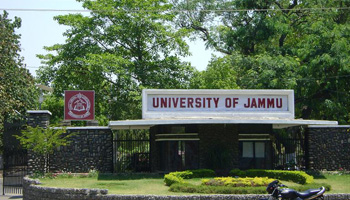
Cradled in the lap of mountains at the foothills of auspicious Trikuta, besides the river Tawi at an altitude of 1030 ft. is Jammu. This 'city of temples' has many places...
Cradled in the lap of mountains at the foothills of auspicious Trikuta, besides the river Tawi at an altitude of 1030 ft. is Jammu. This 'city of temples' has many places...


One of the emerging challenges faced by any higher educational institution is the development, application and maintenance of quality...
Two-Day Workshop on Research Methodology for Longitudinal Study on Gaddi and Bakarwal Tribes Inaugurated at the University of Jammu
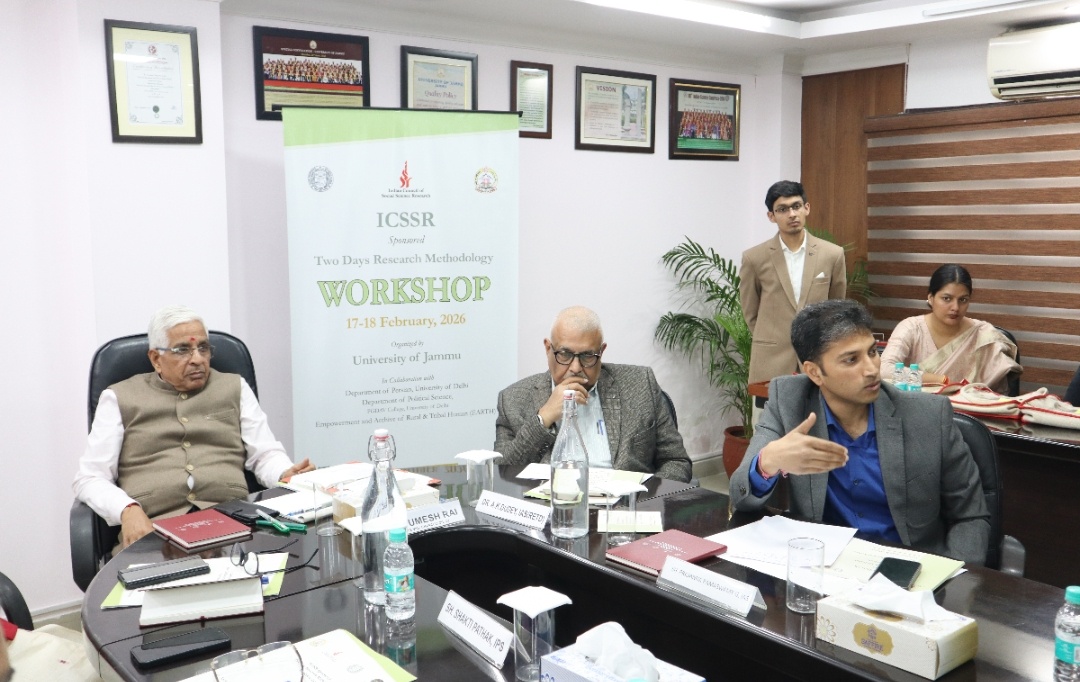
Jammu, Feb 17: A two-day workshop on Research Methodology for the Longitudinal project titled “Socio-Political, Economic, Religious, and Cultural Transformations among the Gaddi and Bakarwal Tribes of Jammu and Kashmir” was inaugurated at the University of Jammu. The workshop aimed to refine research methodologies and foster interdisciplinary dialogue for conducting a long-term, evidence-based study on tribal communities of the region. The inaugural ceremony was graced by Prof. Umesh Rai, Hon’ble Vice-Chancellor of the University of Jammu as the Chief Guest. The presence of distinguished guests including Dr. A. K. Dubey, IAS (Retd.), Former Administrative Member, Central Administrative Tribunal, Sh. Shakti Kumar Pathak, IPS, Director Anti-Corruption Bureau, J&K and Sh. Prasanna Ramaswamy G, IAS, Secretary, Tribal Affairs, Government of Jammu and Kashmir underscored the administrative and policy relevance of the project and its potential contribution to tribal governance and development planning.
Prof. Suman Jamwal, Project coordinator, introduced the objectives, scope, and significance of the longitudinal study. She also highlighted that the project seeks to document dynamic transformations in tribal societies over time, integrating socio-political, economic, religious, and cultural dimensions through a multidisciplinary and transdisciplinary framework. Dr. Harish Chander Dutt, one of the Project Directors of the study, presented a comprehensive overview of the project, emphasizing its innovative longitudinal design, field-based data collection strategies, and integration of qualitative and quantitative approaches. He also elaborated on the relevance of traditional ecological knowledge, governance structures, livelihoods, and cultural practices among the Gaddi and Bakarwal tribes in the context of modernization, policy interventions, and climate change.
The workshop featured eminent resource persons including Dr. Gopal Krishan, a senior environmentalist; Prof. Avanindra Nath Thakur and Prof. Parmil Kumar, who delivered expert lectures on research design, participatory methodologies, ethical frameworks, and interdisciplinary integration in longitudinal social research. Their sessions stimulated rich academic discussions and provided critical insights for strengthening the research framework of the project. Prof. Yash Pal Sharma, Dean, Life Sciences while discussing the cultural aspects of Bakerwal tribe said that the stay of Bakerwals in the agriculture forms during their migration is always a mutual agreement between the villagers and Bakerwals. Bakerwals get fodder for their animal flocks from the owners’ agriculture field and the owner of the land gets manure in the form of dung of the animals. Sh. Vikramjit Singh (IAS), Secretary Industries, Government of UT of Jammu and Kashmir who session assured the industrial linkages with both the tribes.
Considering the multidisciplinary and transdisciplinary nature of the project, participants engaged in intensive deliberations on research objectives, indicators, sampling frameworks, policy interfaces, and community engagement strategies. The discussions reflected a convergence of perspectives from social sciences, ecology, governance, anthropology, and development studies, thereby enriching the conceptual and methodological foundation of the study. Prof. Shyam Narayan, Project Director; Ms. Shruti Awasthi, Regional Director, IGNCA, J&K; Mr. Brajesh Kumar Jha, President EARTH, Mr. Parshotum, Prof. (Brigadier) (Retd.) Neeraj Soni, Dr. Sangya Dubey, Prof. (Dr.) Manoj Bhatt, Prof. Bikham Pal and other project staff members were also present and actively contributed to the deliberations. The workshop served as a platform for collaboration among academicians, administrators, and practitioners, ensuring that the research outputs would be policy-relevant and socially impactful.
The session concluded with Dr. Bhanu Kumar, Project Director presenting the vote of thanks, acknowledging the guidance and support of the Vice-Chancellor, esteemed guests, resource persons, and participants for their valuable contributions. He emphasized that the outcomes of the workshop would significantly enhance the methodological rigor and societal relevance of the longitudinal study. The workshop marked a significant step towards developing a robust research framework for understanding the evolving socio-cultural and economic dynamics of the Gaddi and Bakarwal tribes, with implications for sustainable development, tribal welfare policies, and inclusive governance in Jammu and Kashmir.